Jingmai Mountain: World’s First Tea Cultural Heritage Site
Table of Contents
- 1. If you’re craving a trip that slows everything down—a place where the air feels softer, the days feel longer, and nothing rushes you—then Jingmai Mountain might be exactly what you’re looking for.
Jingmai Mountain Facts

The World’s First Tea-Themed UNESCO Cultural Heritage Site
On September 17, 2023, at the 45th UNESCO World Heritage Conference in Riyadh, the Cultural Landscape of Old Tea Forests of Jingmai Mountain in Pu’er was officially added to the World Heritage List. It became the first tea-themed cultural heritage site on earth.
For more than a thousand years, local Chinese ethnic groups learned to cultivate tea under the forest canopy, creating the unique ecology of Jingmai Mountain tea under the forest. Five massive ancient tea forests, nine traditional villages, and three protected buffer forests form the core of this heritage site—living proof of harmony between humans and nature.
Must-Visit Attractions on Jingmai Mountain
Ancient Tea Forests
Your Yunnan tour to Jingmai Mountain begins with the scent of tea drifting through vast ancient tea forests. These forests cover over 28,000 mu (about 1,870 hectares) and hold more than 3.2 million ancient tea trees — most over a century old, with some reaching a thousand years. Walking here feels like stepping into a living oil painting: mossy ground, soft sunlight, tree shadows, and the refreshing smell of Pu’er tea in the air. Join a Jingmai Mountain tea farmer for a hands-on picking experience, and then try to make tea the way it’s been done for centuries.Traditional Villages
There are 14 traditional villages scattered across Jingmai Mountain, home to Dai, Blang, Hani, Wa, and other ethnic groups. Every village has its own charm, but these are the ones you shouldn’t miss.Wengji Village
This thousand-year-old Blang village is one of the must-visit spots on Jingmai Tea Mountain. Hidden inside the ancient forest, Wengji still preserves the most original Blang culture — stilted wooden houses, a central village square, the Wengji temple, and even a sacred 2,500-year-old tree. People often call it a “living museum” of the Blang people. Here, you’ll see Jingmai Mountain tea leaves dry on bamboo trays in front of each home, elders sit around fire pits roasting tea, and friendly villagers invite travelers for free tastings.Manghong Village
It is one of the most photogenic viewpoints on Jingmai Mountain. Early morning clouds swirl between tea forests, and sunset paints the sky gold. If you’re lucky, you’ll see “god rays” breaking through layers of mist — a dreamlike scene that looks straight out of a fantasy film.

Nuogan Village
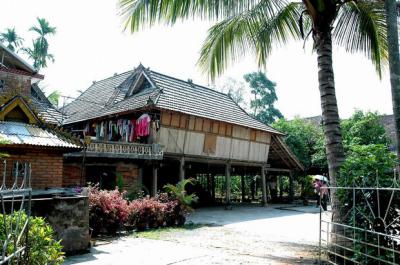
Nuogan is a Dai village tucked deep in the forest of Jingmai Mountain, marked by bamboo houses, peaceful alleys, and everyday village life. Compared with Wengji, Nuogan is larger and more lively. You’ll find great roasted chicken, local milk tea, and tiny cafés run by villagers. Green vines climb over stone paths, temples hide beneath giant trees, and the rhythm of life is slower than anywhere else. Don’t miss the wind-rain bridge at sunset — it’s the perfect golden-hour spot.Mangjing Village
As one of the best-preserved villages on Jingmai Mountain in Yunnan, China, Mangjing greets visitors with the legendary “Bee God Tree,” home to wild bees and believed to protect the Jingmai Mountain tea forest. There’s also a small Intangible Heritage Museum, great for a quick look at old tea tools and the stories behind Jingmai’s UNESCO status.Jingmai Golden Pagoda
Sitting at the peak of Jingmai Mountain at about 1,600 meters, the Golden Pagoda rises like a sacred beacon above the forest. The whole tower is wrapped in brilliant gold, and when the sunlight hits it, it glows so intensely that it almost feels unreal. Its design mixes classic Dai-style architecture with Buddhist touches — tiered roofs that open like a lotus and finely carved Buddha figures and patterns that show off the craftsmanship here.
>> Recommended 12-day Yunnan highlights tour with minority culture immersion
Jingmai Mountain Tea Culture
Jingmai Mountain is known for its legendary Pu’er tea and nearly 2,000 years of tea-growing history. Jingmai Mountain tea isn’t just a drink — it’s a lifestyle. The Blang and Dai people have countless tea rituals, and tea plays a role in festivals, worship, and daily hospitality. Don’t hesitate to try ancient-tree Pu’er at a Jingmai Mountain Pu’er tea shop, join a picking workshop, or sit by the firepit for roasted tea and storytelling. Jingmai is one of the top places to enjoy Chinese tea. If you love Pu’er tea or dream of joining a China tea tour, this is your paradise.>> Recommended 4-day tour to the birthplace of Pu’er teaBest Time to Visit Jingmai Mountain
At 1,400–1,600 meters, Jingmai Mountain in Yunnan enjoys a mild subtropical climate with no extreme heat or cold, just soft transitions between dry and wet seasons. Spring (March–May) and autumn (September–November) are the most comfortable months and the best time to visit, with fresh Jingmai Mountain tea shoots in spring and crisp mountain breezes in autumn. Winter (December to February) is the cloud-sea season, and summer (June to August) is cool and perfect for escaping the heat during your Yunnan travel.
If you prefer a festive atmosphere, visit Jingmai Mountain during the Shankang Festival, which is the Blang people’s biggest celebration of the year, usually falling in April (lunar Feb 27–Mar 1).

Jingmai Mountain Food
Jingmai Mountain isn’t just for Chinese tea lovers — it’s a foodie’s dream too. The villages here have their own bold, earthy flavors. One thing you have to try is the Dai-style hand-grabbed rice. Eating with your hands and all, it just tastes better that way. Grilled chicken is another local favorite, with crispy skin, juicy meat, and that smoky aroma you can smell from far away. And don’t skip the bamboo-tube rice; the sticky rice soaked with the fragrance of bamboo is ridiculously good.Jingmai Mountain Accommodation
Staying overnight in the Jingmai Mountain villages is part of the experience. Most guesthouses cost around 200 RMB and are simple but charming. If you want sunrise views from your window, stay in Mangjing or Manghong. For more dining and shopping options, Jingmai Dazhai is your best base. Wake up to birdsong, sip a cup of Pu’er tea, and enjoy the quiet village atmosphere — it’s unforgettable during your Yunnan tours.Recommended Jingmai Mountain Tour Itinearies
Check any Jingmai Mountain map, and you’ll notice that most villages sit along a single mountain road. Most travelers spend 2-3 days here, and below are two easy routes for you to explore the mountain.2-Day Itineary
Day 1: Huimin → Golden Pagoda → Jingmai Dazhai → Nuogan Village → Dapingzhang Ancient Tea Forest → Manghong (stay)Day 2: Manghong (sunrise) → Mangjing (Princess Banyan Tree) → Bee God Tree → Wengji Village → Return3-Day Itineary
Day 1: Huimin → Golden Pagoda → Jingmai Dazhai → Nuogan → Wengji (stay)Day 2: Wengji → Tea-picking Experience → Dapingzhang Ancient Tea Forest → Manghong (stay)Day 3: Manghong (sunrise) → Jingmai Dazhai Village → ReturnHow to Get to Jingmai Mountain
By Air
The closest airport to Jingmai Mountain is Lancang Jingmai Airport, which has flights from Kunming and Mangshi. After landing, just hop on the airport shuttle to Lancang Bus Station and switch to the direct bus to Mangjing Village — the ride takes around 2.5–3 hours.
If you’re flying in from bigger cities like Beijing or Shanghai, it’s usually easier to land at Xishuangbanna Gasa Airport. From there, grab a taxi or the airport shuttle to the main bus station, where three buses a day go straight to Jingmai Mountain (departures at 8:40, 9:00, and 14:00). Tickets are about 120 RMB.
By Train
Take the high-speed train to Pu’er or Xishuangbanna. From Pu’er Railway Station, there’s a direct bus to Mangjing (150 RMB one-way) at 13:30 daily. If you arrive at Xishuangbanna Railway Station, for a Xishuangbanna tour to Jingmai, you’ll need to take a bus or taxi to the Xishuangbanna Bus Station first, then catch the bus to Jingmai Mountain.
Tip: There are limited direct buses a day from Pu’er, Lancang, and Xishuangbanna to Jingmaishan, so it’s best to book in advance via the “Golden Peacock Ticketing” WeChat account. Miss them? No worries — you can take a bus to Huimin Town first and then catch a local bus up the mountain for around 15 RMB (4–5 buses run daily).

Explore Jingmai Mountain with ETC
Looking for a completely worry-free way to explore Jingmai Mountain, its tea forests, ancient villages, and Pu’er culture? You can travel with Easy Tour China, a reliable travel agency with over 20 years of experience in tailor-made private China tours. We can design a customized tour of Jingmai particularly for you. Or you can join our popular China tea tours with Yunnan—a great choice if you want to go deeper into the region’s tea culture and the old tea-horse road.