Temple of Bliss (Jile Temple Harbin)
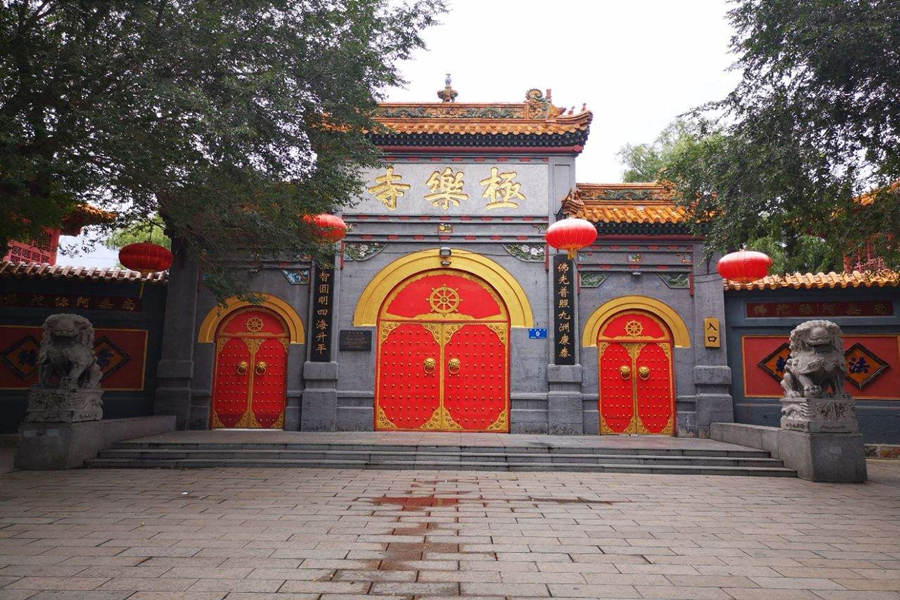
Harbin's Temple of Bliss or Jile Temple is one of the four famous Buddhist temples in the three provinces (Jilin, Liaoning, and Heilongjiang) in northeast of China. It is worth to visit when you travel in Harbin, especially for Buddhist culture loveres.
Covering an area of 5.7 hectares, the Jile Temple is situated at the end of Dongdazhi Street in Nangang District, Harbin. It was constructed in the 1921, and went through several changes before reaching its final shape in 1924 and held the consecration ceremony in 1928.
Today, the Temple of Bliss, a Buddhist holy land, still welcomes endless stream of pilgrims to worship the gods and pray everyday.
Harbin Jile Temple Facts
Brief History of Temple of Bliss
Jiele Temple is situated on Dongda Street in Nangang District, Harbin, traditionally regarded as the city's dragon vein. In the early 20th century, foreign missionaries constructed multiple churches along Dazhi Street. These Western churches were built directly on the dragon's spine, disrupting Harbin's feng shui. Consequently, calls arose to establish a Buddhist temple, leading to the founding of Jielüe Temple.
Constructed in 1921, Harbin's Ji Le Temple is a Buddhist monastery founded by the eminent monk Master Tang Xu, the 44th Patriarch of the Tiantai School. The temple was named “Ji Le” (Temple of Bliss) because the first scripture Master Tang Xu preached during his first visit to Harbin in 1922 was the Sutra of the Buddha on Amitabha, and because its initiators, including Chen Feiqing, adhered to the Pure Land School of Buddhism.
Layout & What to See at Temple of Bliss
The Temple of Bliss in Harbin is a very spiritual place where you can feel a buzz and the incense smoke in the air. It is honored as one of four well-known temples in Northeast China on a par with the other three: Cien Temple in Shenyang, Lengyan Temple in Yingkou and Banruo Temple in Changchun.
Jile Temple is looked upon as the model for visitors to understand and appreciate the art of Chinese temple building for its architecture and it’s lay out and all are designed strictly after the Chinese Buddhism style.
Facing south, Temple of Bliss falls into three courtyards on the left, middle and right.
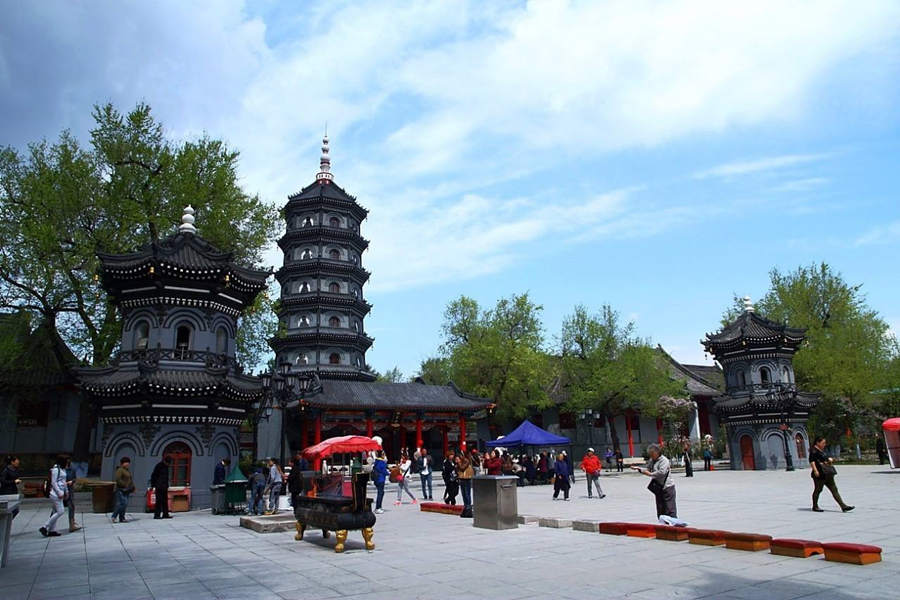
A seven-story pagoda is the symbol of the temple. Measuring more than 30 meters tall, there are eight upturned eaves and graceful Buddhist pictures on the walls in each level. The Mountain Gate is built to resemble a Chinese character, which means mountain in English, hence the name "Mountain Gate".
The Drum Tower and the Bell Tower enter the main gate of Temple of Bliss. At every sunrise and sunset, the monks will beat the drum and the bell of two towers for asking the other monks to do their morning and the afternoon worships.
Temple of Bliss is made up of the Mountain Gate, the Heavenly King Hall, the Hall of Three Saints, the Hall of Mahavira, Scriptures-storing Tower, Chanting Hall, Side Hall, Anyang Hall, Shifang Hall and the monks' cells.
The Heavenly King Hall is the first hall. There is a 1.6 meters tall sitting statue of Maitreya in the middle, with the sitting statues of the Four Heavenly Kings in the east and west.
Major Temple of Bliss Attractions
Heavenly King Hall
The Heavenly King Hall is the first hall on arrival. When you enter the temple of the Heavenly King Hall, the first thing that comes into your eyes is the giant smiling Buddha with a big belly, his name is Maitreya. The sitting statues on the east and west side are the Four Heavenly Kings, the magic weapons they hold symbolizes fine weather and good harvest
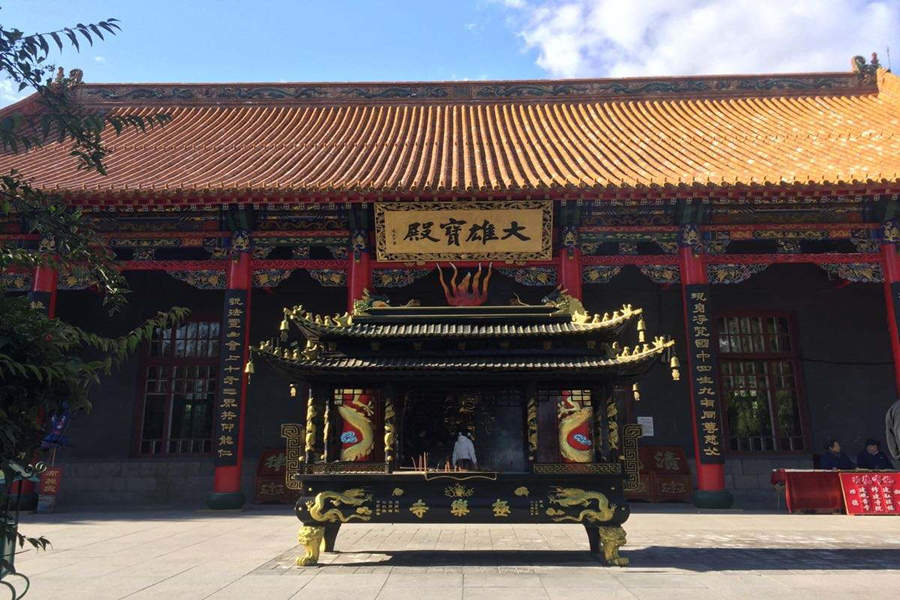
Hall of Mahavira
The Hall of Mahavira is the main building of Jile Temple which is located in the center area of the axis of the whole temple complex. There is a pair of majestic stone lions in front of the Hall of Mahavira, and it is said they were came down from Tang Dynasty. A 2.7 meters tall sitting statue at the center of the hall is Sakayamuni, the founder of Buddhism. The golden symbol on his chest was read as “Wan” by Empress Wu zetian of Tang Dynasty. It symbolizes auspiciousness and the protection of God, as well as the alternation of life and our four seasons, peace and prosperity.
Seven-Storied Pagoda
The Seven-Storied Pagoda located in the east of the Temple of Bliss. The height of this tower is around 37 meters, the layout is very rare is China. It is an octagonal seven-storied pavilion style brick tower. There are windows on the east, south and west sides. In the north side, there are windows above the 3rd floor. The rest are surrounded by arched niche with 31 vivid arhat sculpted reliefs.
Best Time to Visit Temple of Bliss
There will be big celebration on the first and fifteenth day of every month, as well as the eighth, eighteenth and twenty-eighth day of April of our Chinese lunar calendar, Temple of Bliss will be very busy at that time. If you want to take Harbin trip during Harbin Ice and Snow Festival, the best time is from the end of the Dec to the early Feb.
Please note, during the Spring Festival, it opens at 5 a.m. and remains open until around 4 a.m.
How to Get to Temple of Bliss
1. It can be reached by bus 3, 6, 14, 33, 37, 53, 55, 66, 74, 92, 104, 105. Get off at Harbin Engineering University station, and walk about 4mins can arrive there.
2. Take Subway Line 1, get off at Harbin Engineering University station, and walk about 4mins can arrive there.
Travel Tips
- Avoid wearing shorts or short skirts when visiting a temple in China. It is recommended you wear long pants or long dresses.
- When entering the temple, do not step on the threshold. According to Buddhist tradition, men should step left, while women should step right.
- It is prohibited to take photos of the Buddha statues.
- It is suggested to arrive before 8:30 to avoid crowds. After 11 o'clock, you may expert that the number of tourists increase significantly.