Dali Food and Restaurants
In Dali, where spring reigns year-round, the Bai people have lived for generations amidst the picturesque Cangshan Mountain and Erhai Lake. Therefore, Bai cuisine is the mainstream of Dali's culinary culture.
Whether it's delicacies from the mountains and sea or street food, every traditional Dali dish carries a rich local flavor, telling a story from a bygone era. This article will introduce must-try Dali foods and the most popular restaurants in Dali among locals, ensuring your trip to Dali is not only fun but also delicious.
Dali Cuisine
Half the essence of Yunnan cuisine lies in Dali. Why? Historically, Dali has always been the political, cultural, and economic center of western Yunnan. With the interaction of multiple ethnic groups and cultures here, the unique Dali food culture has emerged.
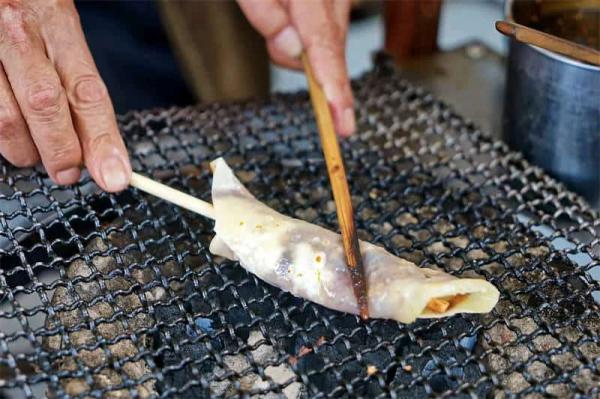
Dali is located in a low-latitude basin and has abundant resources. The main food crops include 39 varieties, while the miscellaneous grains amount to 32 varieties. There are over 60 kinds of fruits, vegetables and other produce.
Like many other famous tourist destinations in Yunnan, Dali is also famous for its fungi, such as the termite mushroom (Termitomyces albuminosus), a wild mushroom and one of Dali's specialties.
People in Dali love to eat fish, and Erhai Lake serves as a natural fish reservoir, teeming with various species, including carp, crucian carp, eels, and loaches, as well as snails, shrimp, and stone crabs. Snail roe is a premium dish served by the Bai people to honor guests, prepared in various ways—raw, cooked, pickled, or in soups.
The Dali diet primarily consists of rice and wheat, supplemented by other grains. Rice noodles, known locally as Erxian (now called rice noodles), are also a staple.
The Bai people of Dali have a tradition of consuming herbal porridge (essentially medicinal porridge), prepared by simmering seasonal herbs and flowers according to the solar terms to prevent or treat certain ailments. Additionally, there is a wide variety of cakes and pastries, each with unique flavors and distinctive styles.
There is also a tradition of eating mutton in the Dali area. In the past, Dali had poor transportation and relied on horses and donkeys for transportation. Therefore, donkeys were not only used as transportation tools but also as a source of meat. In addition, the Dali area also has pork sausages, raw skins made from pig skin, red yeast meat, lotus root braised meat, and so on.
Flavors of Dali Food
Dali food emphasizes the original flavor of the ingredients, therefore Bai people enjoy spicy, sour and fresh dishes. Acidity can eliminate dampness, spiciness can drive away cold. For the new comers, even a little bit local spice may make your tongue burn. The fresh ingredients are lake fish and mushrooms from the local Erhai Lake and the mountains of Cangshan. They also incorporate the flavors of Chinese cuisine from the Central Plains and the Tibetan region.
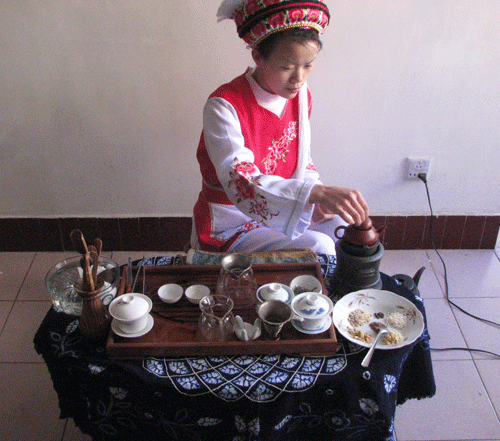
ChineseTea Drinking in Dali
The people of Dali love drinking tea. The tea in Dali is not only diverse in types but also has specific drinking customs. The most popular tea in Dali, The Three-course Tea is a very interesting tea ceremony, including the three courses of tea with different tastes: bitterness, sweetness and a mixed aftertaste. This can imply a life philosophy: Hardness and bitterness come first, followed by sweetness, finally the life is a mixture of different tastes.
Most Famous Food in Dal
Dali Claypot Fish (大理砂锅鱼)
Dali Claypot Fish is a signature Dali food served by the Bai people to honor guests, and it stands as one of Dali's classic traditional delicacies.
Evolving from the claypot fish head dish, Dali Claypot Fish primarily features fish sourced from the Bai ethnic group, complemented by tofu, ham, bean sprouts, meatballs, and other ingredients. During preparation, all components are simmered together in a clay pot until fully cooked. Once cooked, the fish meat becomes tender and succulent, offering a rich and flavorful experience alongside the diverse ingredients.
Yongping Braised Chicken (永平黄焖鸡)
Golden chicken, emerald green scallion segments, pure white garlic chunks, and bright red chili peppers—along with over a dozen spices like Sichuan peppercorns, cardamom, ginger, and star anise—are infused with an intense, aromatic fragrance by fragrant rapeseed oil. The result is rich yet not greasy, aromatic without being overly spicy. Today, “Yongping Braised Chicken” has become one of Yunnan's must-try food.
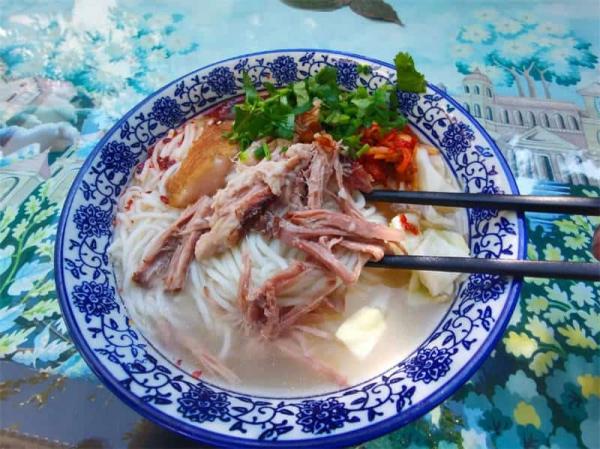
Weishan Braised Meat with Rice Noodles (巍山扒肉饵丝)
A bowl of authentic Chinese rice noodles in Weishan Old Town features chewy yet tender strands, paired with succulent meat and a fragrant broth—fully meeting modern nutritional standards.
Jianchuan Earthenware Eight Bowls (剑川土八碗)
The “Eight Bowls” represent a signature creation of Bai ethnic culinary culture, serving as the centerpiece of Bai celebratory feasts and traditional Chinese festivals. Originating from Jianchuan County—home to the largest Bai population in the prefecture—this dish is renowned as the most authentic version, specifically called Jianchuan Earthenware Eight Bowls.
Each of the eight dishes bears an elegant name: Joyful Arrival (crispy pork slices) Eight Immortals Celebrate Longevity (pork knuckle skin) Bone and Flesh Together (crispy spare ribs) Family Reunion (vegetable dumplings) Wealth and Prosperity in Bloom (chilled vegetable slices) Five Blessings Under One Roof (mixed vegetable soup) Purity and Integrity (white bean soup) Happiness and Fulfillment (steamed pork with rice flour).
Yunlong Nuodeng Ham (云龙诺邓火腿)
Nuodeng in Yunlong is a millennia-old Bai village renowned for its well salt production. The secret to Nuodeng ham's exquisite flavor lies in its 12-month ecological pig farming followed by a lengthy 24-month natural fermentation after curing.
Dali Sour and Spicy Fish (大理酸辣鱼)
Made with locally sourced crucian carp, its sourness comes from black plums or papaya, while red chili powder provides the heat. Simmered slowly over low heat with a touch of Sichuan pepper, ginger, and garlic, it's served with tofu and potatoes, reduced to a thick sauce.
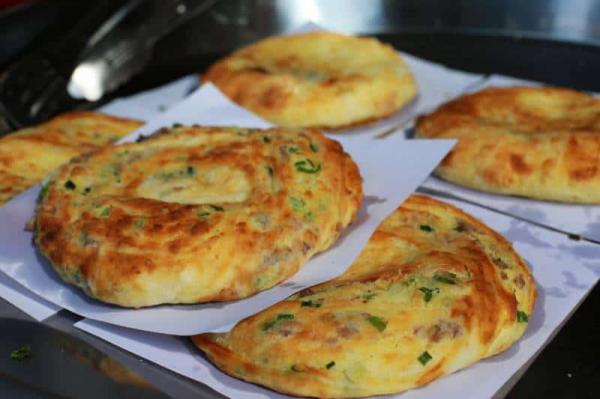
Xizhou Baba (喜洲粑粑)
Also known as “Posu,” Xizhou Baba is a wheat flour baked pastry celebrated for its color, aroma, flavor, and shape. Originally a common dish in Bai peasant households, it has become a sought-after snack. Its outer layer is crispy while the interior remains soft, available in both sweet and savory varieties.
Dali Milk Fan (乳扇)
The saying “Among Yunnan's eighteen oddities, milk is sold in sheets” refers to this unconventional dairy product. Milk fan boasts a unique shape resembling a rhombic bamboo fan, with milky white to pale yellow hues and gripping edges at both ends. It delights whether eaten raw, smoked, deep-fried, or pan-grilled.
Dali Raw Skin (大理生皮)
Dali Raw Skin is another famous Dali dish mainly made of rice flour, accompanied by various vegetables and seasonings.
Cold Shrimp (凉虾)
Dali Cold Shrimp is a signature sweet dessert of the Bai ethnic group in Dali, crafted from rice paste and shaped like tiny shrimp. Sweet, smooth, and icy cold upon entry, it's incredibly appetizing.
Erhai Lake Snails (洱海螺蛳)
Erhai Lake Snails are a signature Dali snack food made from freshwater snails harvested from Erhai Lake. Their distinctive flavor and texture make them a unique culinary delight in Dali.
>> Recommended Dali tours:
Famous Food Streets and Markets in Dali
Dali's food streets, including the ancient city streets, hole-in-the-wall eateries, and night markets, offer diners the chance to savor renowned Dali cuisine and authentic street snacks.
- Fuxing Road in Dali Old Town is home to several famous landmarks, including the former Yunnan Provincial Military Governor's Mansion, Wuhua Tower, the Confucian Temple, and the Old Town's North Gate.
- Renmin Road in Dali Old Town, with the East Gate of the Old Town on the east side, is the main thoroughfare of the Old Town, offering distant views of Cangshan Mountain to the west and Erhai Lake to the east. In the evening, there are food stalls, bars, and other night markets.
- Dali Old Town's Foreigners' Street, also known as Bar Street.
- Fengyi Street, nestled beside Cuiyu Fengshan Mountain, is Dali's hidden culinary paradise. Here you can savor authentic raw pork skin, sour-spicy fish, rice noodle rolls, rice vermicelli, and Xizhou pancakes.
- Xingguo Road's grilled and braised delicacies are only available in the morning. Additionally, the Bai ethnic rice cakes and roasted rice cakes are highly recommended.
Recommended Dali Restaurants
In Dali old town, you will see many nice restaurants, which are mainly located at Huguo Road and Remin Road, serving both Chinese, Western food as well as local Bai's cuisine.
Best Chinese Food Restaurants in Dali
Meizijing Restaurant (梅子井酒家)
This is a long-established Yunnan cuisine restaurant located in Dali Old Town. The restaurant is situated within a traditional Bai courtyard, preserving the architectural features of the ancient buildings. It offers traditional dishes incorporating local ingredients, such as plum-scented pork, spicy and sour fish, and tile-grilled fish. Its signature product is its homemade plum wine series (including a ten-year aged variety) made with a unique process.
Yunhe Yihaijing Manor (云禾壹海景庄园)
Located at the foot of Cangshan Mountain, it offers panoramic views of Erhai Lake. If you'd like to dine in a horse-drawn carriage, remember to make a reservation in advance! The average cost per person is around 100 RMB.
Best Vegetarian Restaurants in Dali
Ciyuanzhai Vegetarian Restaurant in the Ancient City (古城慈缘斋素食馆)
The restaurant specializes in blending traditional vegetarian ingredients with Western-style seasonings, offering creative vegetarian dishes such as pastries, steaks, and pizzas. The courtyard-style dining environment provides customers with a dining experience that combines health and aesthetics.
Yirantang (一然堂素食馆)
It's a vegetarian restaurant that operates on a 5-yuan buffet basis. Each meal includes five vegetarian dishes, a side dish, soup, porridge, and mixed grain rice. Tea and hot water are provided free of charge.
Selemu Halal Restaurant (色了木清真餐厅)
If you enjoy strong flavors, this is definitely your paradise. However, if you can't handle spice, remember to ask them to use less chili beforehand. Signature dishes include cold chicken rice noodles, cold pea flour salad, and stir-fried rice noodles.
Best Western Restaurants in Dali
Forten (福十Forten·左岸花园咖啡西餐厅)
Recommended dishes include spaghetti bolognese, salmon and egg rice, and bouquet salad. Average price per person: CNY 80-100.
The Market Neighbourhood cafe
Chongsheng Temple measures 6 meters in length and 1 meter in diameter, earning it the title of “King of Vajras.”